

The 37.6km-long Light Rail Transit 3 (LRT3), also known as the Shah Alam Line, is a light rail line under development in Malaysia.
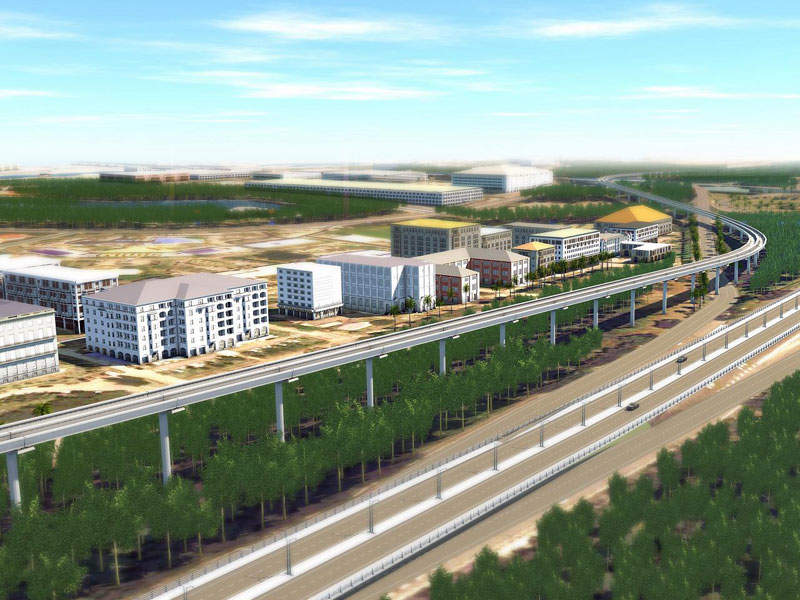
The line, which includes a 35km viaduct and a 2km underground tunnel, will link Bandar Utama with Johan Setia in Klang.
Recommended White Papers

Recommended Buyers Guides

Prasarana Malaysia was appointed to develop and operate the line upon completion. Construction on the RM16.63bn ($4.07bn) project commenced in 2017.
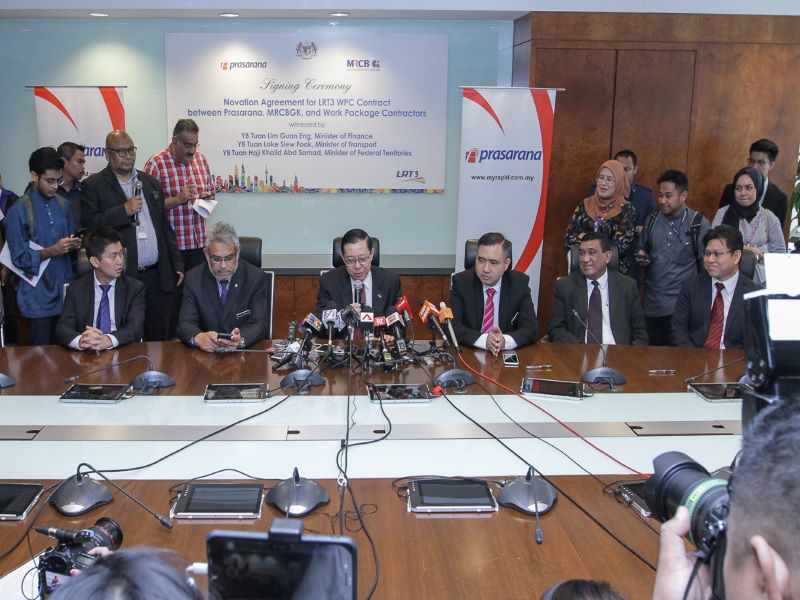
The project cost increased to RM31.65bn ($7.75bn), which was later reduced to RM16.63bn ($4.07bn) after the project implementation model was changed from the project delivery partner (PDP) to the fixed price contract regime. A novation agreement was signed in February 2019 to pave the way for the change in the project model.
As of December 2025, the project is in the testing and commissioning phase.
The project is expected to stimulate economic growth in the region and create employment for approximately 2,000 personnel during the construction phase.
Light Rail Transit 3 project details
The light rail transit line is part of the Greater Kuala Lumpur/Klang Valley (GKL/KV) Land Public Transport Masterplan of the Land Public Transport Commission (SPAD). It will provide connectivity to the western part of GKL/KV.
The project is expected to benefit 67,000 passengers daily and 500,000 residents across the alignment by improving connectivity and reducing traffic congestion. It incorporates the use of U-troughs in the design, which is a new technology in Malaysia.
The LRT3 will offer a convenient and cost-effective system with minimal land acquisition and will be closely integrated with other transport services.
The project is also anticipated to strengthen communities in Petaling Jaya, Shah Alam and Klang by promoting mixed-use real estate development around its stations. The project aims to serve more than two million people in the Western Corridor of Klang Valley.
LRT3 route details
The LRT3 line route is divided into three main segments. The first segment will begin from Bandar Utama and end at the proposed Persada PLUS station. It will pass through Damansara Utama, Taman Kayu Ara Indah, Puncak Damansara Condominium and Dataran Prima areas.
Segment two will start from Persada PLUS Station and pass through the Temasya, Glenmarie, Shah Alam town centre, UiTM campus and I-City Station before ending at Bukit Raja. The segment will include a 2km underground section.
The third segment of the line, situated in the MPK area, will start from Bukit Raja and pass through Kawasan 17, Jalan Meru, Klang town and Bandar Botanic to end at Johan Setia.
Station details of LRT3 project
The LRT3 project originally envisaged the construction of 26 stations, but the number of stations was reduced to 20, of which 15 will be elevated stations. An additional five stations are planned as future stations.
The Western Corridor of the LRT 3 project comprises 12 stations, one depot, and two bus depots along an 18.4km stretch.
Ten of the stations on the line will be equipped with parking areas accommodating approximately 6,000 cars.
Stations in the project are set to feature passenger information display systems (PIDS), fire protection systems, closed-circuit televisions (CCTV) and automatic fare collection (AFC) systems.
The LRT3 is connected to two stations of the existing light rail transit network. Station 1 is linked with the MRT Bandar Utama station, and Station 7 is connected to the LRT Kelana Jaya line (CGC Glenmarie Station).
The stations will also be integrated with the BRT Federal line and the KTM Komuter Port Klang Line.
Station design details
The station design draws inspiration from the traditional Malay headgear known as tanjak.
The metal deck structure of the stations mimics the folded and pleated fabric of the tanjak, featuring two distinct planes. The upper plane includes clerestory louvred windows, drawing inspiration from the open central area of the tanjak.
To enhance cross-ventilation and add visual appeal, a series of louvred windows is strategically placed along the elongated roof of each station.
Each station spans two floors and is equipped with essential facilities, including boom gates, ticketing and information counters, a station office, a prayer room, and restrooms. Accessibility is prioritised through various bridges, staircases, escalators, and lifts.
All stations will be equipped with sustainable solutions, including rainwater harvesting technology, noise reduction and energy management systems, and natural ventilation.
Details of the rolling stock for the Malaysian light rail project
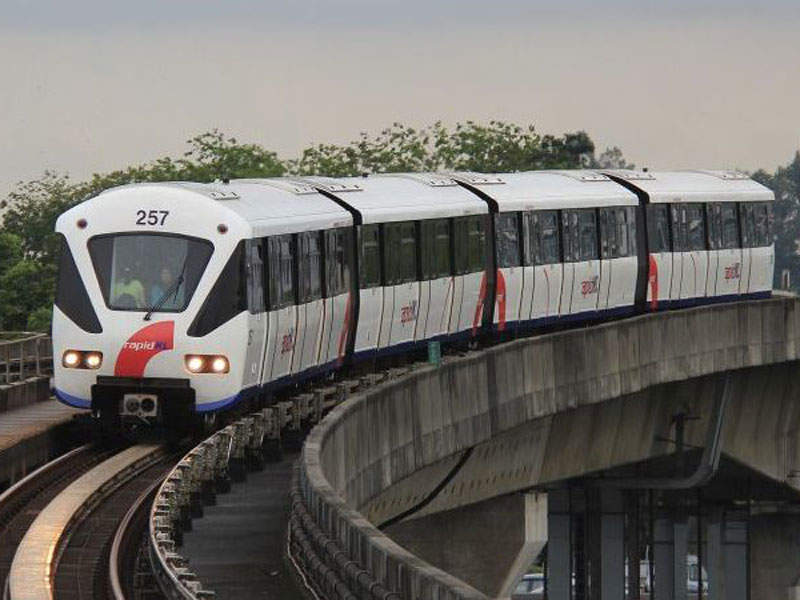
The trains on the light rail line will include six modular cars that are fully accessible from one end to the other.
Each railcar will be 20m long, 2.65m wide, and 3.44m high. The lifespan of the trains is estimated to be 30 years.
The trains will run automatically using a driverless system and communications-based train controls (CBTC). They will move at a maximum speed of 80km/h and be capable of transporting up to 36,720 passengers an hour.
The three-car vehicle configurations are projected to transport up to 18,630 passengers per hour in either direction. Trains will operate every six minutes at peak times.
LRT3 construction details
The project will encompass the construction of a viaduct, elevated stations, underground stations and tunnels, and depots.
The elevated viaducts will be reinforced concrete (RC) structures situated on the road median strip and the roadside. The viaducts will comprise a substructure and a superstructure, with the former consisting of piles and pile caps and the latter consisting of a box girder structure.
The elevated stations of the project will involve the construction of a pile cap, column and cross head. A concourse and platform level will also be constructed.
The underground tunnel guideway and underground stations will be constructed using the cut-and-cover method. Excavation will be performed for the installation of excavation support or retaining a diaphragm wall, followed by the installation of the tunnel top floor, tunnel foundation and base slab.
The project will also include the construction of a depot in Johan Setia and installation of utilities such as internal roads, drains, sewerage facilities, telecommunication lines and electricity cables.
Contractors involved in Light Rail Transit Line 3
Setia Utama LRT 3 (formerly known as MRCB George Kent), a joint venture of Malaysian Resources Corporation and George Kent, was contracted to deliver design and construction services for the project in September 2015. According to the novation agreement, Setia Utama LRT 3 is the turnkey contractor for the project.
Mudajaya, Gabungan Strategik, Rahimkon, APEX Communications, WCT Construction, Sunway Construction, SN Akmida, Pembinaan Jaya Zira, and Trans Resources Corporation (TRC) were awarded infrastructure work package contracts.
Systra received a contract to provide preliminary designs for the project, while ERE Consulting Group prepared the environmental impact assessment report.
Prasarana selected a consortium of Siemens and Rasma to supply and install the signalling and train control system in February 2018. Siemens will also install a platform screen door system (PSD) and an intrusion prevention system (IPS).
Minconsult, an engineering consultancy, completed the feasibility study for the project.
Jacobs, Cemerlang Mega, Raja, Darryl and Loh, MMSB Consult, Emrail, Veritas, Primercon – UTEC Consortium, Perunding Eagles Engineers, NRY Architects, TÜV SÜD, Doshin Rubber Engineering, D&B Construction and Colt Engineering are some of the contractors involved in the project.